Showing posts with label Nuragic. Show all posts

Friday, June 07, 2024

Living In A Mountain

IN east Sardinia is the distinctive mountain of Tiscali, whose name was chosen for the Italian telecoms and internet company Tiscali Italia.
The mountain, 518 metres (1700ft) above sea level, is a doline, ie most of the top of the mountain has collapsed, leaving a great depression and a partial roof.
Tiscali, in the central distance, looks like a regular mountain from afar
Its hollowed-out interior was inhabited from 1400-700 BC, and again from the 2nd century BC, possibly for another 1,200 years.
Some Nuragic people are thought to have lived there as a way of escaping Roman colonisers, who took the island from Carthage in 238 BC.
A hole in the wall makes a natural viewing point from which approaching legionaries could have been spotted
All is not as clear as it might be, however, as archaeologists reckon the building techniques used inside the mountain differ from Nuragic settlements elsewhere on the island.
Possibly the site was used in pre-Nuragic times, but whatever the circumstances it must have been a precarious place to live as apparently the only available water was from rain.
Nuragic dwellings are being painstakingly reconstructed, with much still to be done

Thursday, June 06, 2024

Nuragic Villages

THE Nuragic people were illiterate, but skilled at dry-stone building techniques.
Entrance to a Nuragic arena

Archaeologists believe seating on the internal sides of the walls of this building suggests it was a meeting place for elders

Wednesday, June 05, 2024

Giants' Tombs

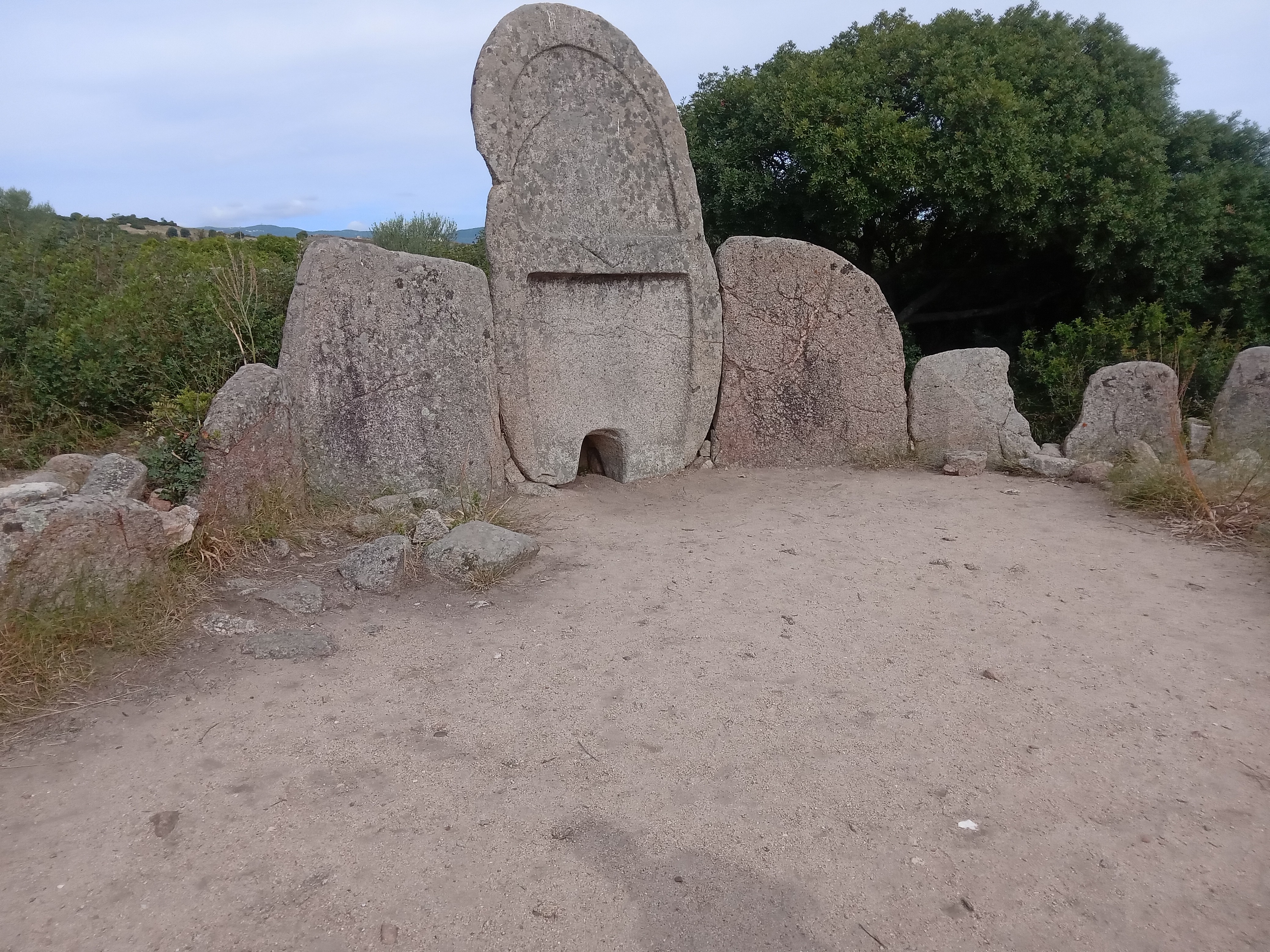
Giants' Tombs are a distinctive Bronze Age feature of the Italian island of Sardinia.
Giants' Tomb near the town of Dorgali
The example pictured above, which I visited yesterday on a walking holiday, is one of about 800 on the island.
They were erected by the Nuragic civilisation, which flourished from at least 1700 BC - some sources say 2300 BC - and in parts of Sardinia may have outlasted Roman colonisation.
The Dorgali Giants' Tomb is a relatively sophisticated version in that the central stone or stele, made of granite and weighing more than seven tons, has been carved to give it a rounded top and central crossbar.
Behind the stele is a burial chamber measuring about 11 metres long.
The length of the burial chamber gave rise to the idea that these were graves for exceptionally tall people
In reality they were collective graves where locals were interred over generations.
Reconstruction by graphic artist Daniel Ventura